

Beer taps: types, features and how to choose the right one
The beer tap is the visible part of a keg-to-tap setup, but it doesn’t work alone. To choose it properly you must consider the beverage, the container, pressure, cooling, tubing, tower, flow rate, foam, cleaning and type of service. A good tap improves the experience; a poorly chosen tap can cause foam, dripping, slow service or maintenance issues.
What types and models of taps for dispensing beverages exist
The main types of beer taps are taps with compensator, without compensator, American style, English style, side-pour, standard, ball, growler, stout or nitro, and taps for other beverages. To choose correctly you must review beverage, pressure, temperature, flow rate, tubing, tower, material, connection, cleaning and real use.
Quick answer: which beer tap you need
If you’re looking for a versatile tap for a beer installation, it’s usually best to choose a tap with flow control, because it lets you adjust the flow rate and helps control foam in systems with variable pressure, cooling or distance. For simple, short and very well-balanced installations you can use a tap without flow control, as long as the system is properly adjusted.
If you’re going to serve stout, nitro coffee or nitrogenated drinks, you need a specific stout/nitro tap. If you want to fill bottles or growlers, there are specific taps or adapters. And for wine, vermouth, kombucha, cider or mead, it’s worth checking materials, cleaning, oxidation, acidity and compatibility with the drink.
Guide contents
What a beer tap is and what it does
The beer tap is the component that controls the flow of the beverage into the glass. It is installed on a tower, column, wall, portable dispenser or integrated system, and is the last point of contact before serving. Its function seems simple —open and close—, but in practice it affects flow rate, foam, texture, hygiene, ergonomics and perceived quality.
A tap does not, by itself, fix an installation that is poorly designed. If the keg is warm, the pressure is incorrect, the line is not balanced or the system is dirty, changing the tap will not solve the underlying problem. That’s why at Install Beer we always apply a clear rule: first you define the system and then you choose the visible tap.
The tap regulates the flow of the drink and allows you to serve with more or less flow, foam, or texture depending on the model.
A good tap helps you pour better, reduces waste and improves presentation in the glass.
It must be possible to clean it properly to avoid off-flavors, residues and contamination in the line.
The tap is not chosen on looks alone
Finish, color and design matter, especially on a visible bar, but the technical decision must come first: beverage, carbonation, pressure, cooling, flow rate, tower type, connection, cleaning and spare parts. A very beautiful tap that is incompatible with the system can cause more problems than benefits.
Quick table of types of beer and beverage taps
These are the most common types of taps in beer and other on‑tap beverage installations. The right choice depends on real‑world use, not just on the product name.
| Type of tap | Recommended use | Main advantage | What to check before buying |
|---|---|---|---|
| Compensator tap | Beer, cider, kombucha or other carbonated beverages. | Allows you to adjust flow and control foam better. | Pressure, temperature, line, type of beverage and connection to column. |
| Tap without compensator | Simple, very well-balanced or low-cost installations. | Lower cost and straightforward operation. | Make sure pressure, line and cooling are properly adjusted. |
| American‑style tap | Fast service, high flow rate and bars with direct draw. | High dispensing speed. | Risk of foam if the system is not balanced. |
| English-style lever tap | Beer, cask, real ale and beverages served for quick opening. | Precise mechanism and optional nozzle filter. | Compatibility with the drink, nozzle, filter, and cleaning. |
| Side‑cut tap | Installations with specific space, aesthetics or side-pull requirements. | Allows horizontal operation. | Height, orientation, column and ease of use. |
| Standard tap | General use for beer and chilled beverages. | Versatility, spare parts and multiple configurations. | Compensator, connection, shank and material. |
| Ball tap | Service with great control, cleanliness and improved flow. | Clean mechanics and precise dispense control. | Compatibility with tower, spare parts and type of beverage. |
| Growler filling tap | Filling bottles, growlers or takeaway containers. | Allows serving into glasses and filling containers. | Gas purging, counter-pressure, hygiene and oxidation. |
Do you want to buy the right tap for your setup?
At Install Beer you’ll find taps with compensator, without compensator, American style, English style, side-pull, ball, growler and configurations for beer and other beverages on tap. If you’re unsure between models, we can help you choose according to beverage, pressure, cooling and real use.
See beer and beverage taps Request technical adviceTap without compensator or direct flow tap
A tap without compensator is a direct-flow tap: it does not include an internal mechanism to regulate the dispensing flow. It allows you to serve at the maximum possible flow according to the pushing pressure and the installation. It can work well in very well-balanced systems, simple towers or applications where serving speed is the priority.
Its main limitation is that it offers less room for adjustment. If the pressure is too high, the keg is warm or the line is not properly sized, a tap without compensator can create foam or a pour that is hard to control.

Tap with flow compensator
The compensator tap incorporates an internal mechanism that allows you to regulate the flow of the beverage. It is one of the most recommended models in professional installations because it helps control flow rate and adapt service when there are variations in pressure, temperature, line length or carbonation.
The flow control tap should not be seen as a magic solution. It is an adjustment tool. It can help reduce foam, improve serving control and work better with carbonated beverages, but it does not replace a balanced installation. If the beer arrives warm or with too much pressure, the flow control tap will only be able to help up to a certain point.
- Bars and restaurants with regular service.
- Installations with several beers or beverages.
- Systems with pressure or product changes.
- Carbonated drinks with a risk of foaming.
- Customers who want a wider adjustment range.
- Better flow control.
- Less dependence on a perfectly balanced system.
- Greater serving precision.
- Reduced waste if properly adjusted.
- More versatility for different drinks.
American‑style tap
The American-style tap is a short tap with high flow and usually without compensator. It is widely used in installations where a fast beverage output and simple mechanics are desired. The spout usually allows a more generous pour, so pressure and cooling balance is especially important.
Although there are versions with flow control, the most common concept is the direct‑flow tap. It can make sense in fast bars, beer bars or installations where the line is well designed and carbonation is under control.

English-style lever tap
The English‑style lever tap is historically associated with cask beer service, although it can now be found in different configurations for beer and other beverages. Its opening and closing mechanism allows fast, precise control.
On certain models you can add a filter or piece in the nozzle to generate more foam in low-carbonation beers, real ale or styles that do not naturally produce abundant foam. It is an interesting tap when you want a pour with personality and a more classic look.


Side‑cut tap
The side-pull tap keeps many of the features of a standard tap, but changes the opening and closing mechanism. Instead of pulling the tap forward, it is operated sideways, which can solve issues of space, height, aesthetics or ergonomics.
It can be with or without compensator. It is useful on bars where overhead space is limited, on special towers or in projects where the visual design of the tower is important without giving up service control.

Standard tap
The standard tap is one of the most widespread and versatile formats. It can be found with or without compensator, with different spouts, handles, shanks, connections and finishes. Its big advantage is that it allows many configurations and spare parts.
For many bars, restaurants, events and advanced home users, a standard tap with compensator is a balanced solution in terms of control, maintenance, parts availability and cost.

Ball tap
The ball tap combines very clean mechanics with precise dispensing control. Its internal configuration reduces areas where drink or yeast can remain, which makes maintenance easier and improves flow. It may come with compensator or direct flow depending on the model.
It is an especially interesting option for setups seeking control, hygiene and a solid user experience. As with any tap, it must be chosen taking into account connection, tower, pressure, beverage and cleaning.

Growler filling tap
The growler-filling tap allows you to dispense drinks into a glass and fill bottles or containers to go. It’s a useful solution in breweries, specialty shops, taprooms and venues that want to sell draft beer or other tap beverages in takeaway format.
This type of tap is more complex than a conventional tap, as it may include functions to purge the container with gas, reduce oxygen, control foam and fill more steadily. To maintain quality, you must pay special attention to hygiene, pressure, carbonation and type of container.

Do you want to fill growlers, serve at the bar, or both?
The right tap depends on whether you are only going to serve by the glass, want to fill containers to go, or need a mixed solution for a shop, taproom or brewery.
See available taps Check compatibilityTaps for wine, vermouth, kombucha, cider, and mead
Install Beer works with dispensing systems not only for beer, but also for wine, vermouth, water, nitro coffee, kombucha, cider, mead, cocktails and other cold drinks. In these cases, the tap must be chosen according to the liquid, not out of beer habit.
Wine and vermouth require attention to oxidation, temperature and materials. Kombucha may have acidity, variable carbonation, residual sugar or sediment. Cider can be still or carbonated. Mead can behave differently depending on the recipe. Cocktails may contain sugar, pulp or viscosity. Each beverage requires its own technical review.
| Beverage | Indicative tap | What to check | Common mistake |
|---|---|---|---|
| Beer | With compensator, without compensator, stout, ball or specific style depending on service. | Carbonation, pressure, cooling, foam and line. | Choosing a tap without checking system balance. |
| Wine | Tap compatible with wine and suitable materials. | Oxidation, temperature, inert gas and cleaning. | Using components that are not suitable for wine. |
| Vermouth | Tap compatible with aromatic and sugary beverages. | Sugar, flavourings, cleaning and stability. | Not cleaning often enough. |
| Kombucha | Tap with good flow control and easy cleaning. | Acidity, carbonation, sediment, pressure and materials. | Treating it like a standard beer without checking the recipe. |
| Cider | Tap according to carbonation and serving style. | Whether it is still, carbonated or sparkling. | Using incorrect pressure or tap. |
| Nitro coffee | Nitro tap. | Gas, cooling, filtration and intensive cleaning. | Using a standard tap while expecting a nitro texture. |
Tap construction materials
Taps can be made from different materials. The most common are metal, with alloys and surface coatings, although there are also taps made entirely of stainless steel and models in plastic materials for specific applications.
For professional installations, stainless steel is often a particularly attractive option because of its hygiene, durability and compatibility with beverages. In any case, the decision should take into account the drink to be served, cleaning frequency, working environment and availability of spare parts.


Tap connections
The tap’s connection to the tower or wall can vary depending on the model and installation. Some taps connect via thread, others via tailpiece, shank, flat connection, quick fitting or direct John Guest-type connection.
Buying the right tap but with an incompatible connection can delay installation or require additional adapters. That’s why before buying it is worth checking whether the tap will go on a tower, wall, bar, portable dispenser or existing system.


Internal components of a tap
A beer tap is made up of several parts that work together: plunger, compensator, spout, springs, internal spear, nuts, trims, seals, lever, handle and tailpiece. The availability of spare parts is important to extend the tap’s service life.
In a professional installation it is advisable to periodically check seals, nozzle, compensator and moving parts. Slight wear can cause dripping, loss of control or air ingress.
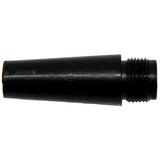
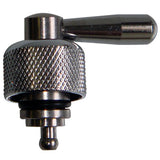


Tap tailpieces
Shanks depend on the tap model and the type of installation. They can be short, long, with barb, threaded or prepared to connect to a specific tower. A long shank may be necessary to pass through walls, partitions or bars; a short shank is usually used in narrow towers or compact setups.
Before buying a tap, it is advisable to confirm the shank length required and the rear connection system. This is one of the areas where most incompatibilities appear when replacing an old tap with a new one.


Types of tap handles
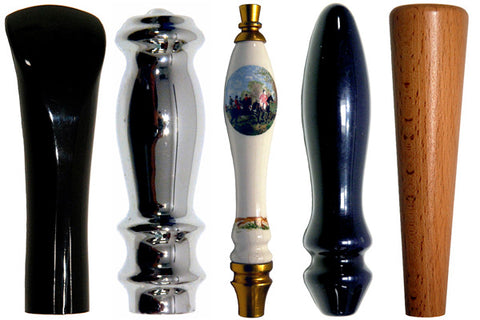
The tap handle is one of the most customisable elements. It can be small, large, metal, wood, resin or plastic, screen‑printed or designed for a specific brand. In hospitality it also helps identify the beverage and improve the presentation of the bar.
In multi-line installations, it’s helpful for tap handles to help staff identify each drink quickly and clearly. At events or on rotating bars, simple, durable handles are usually more practical.

Colors and finishes
Taps can come in different colors and finishes: chrome, polished, gold, bronze, copper, black, red or other configurations. Shiny finishes are the most common, while matte finishes can better hide fingerprints and signs of use.
The aesthetics must match the bar, but only after confirming technical compatibility, cleaning and spare parts. In high-use bars, durability and ease of maintenance are as important as color.


Tap, tower and system: why you need to decide in order
In a professional installation it is not advisable to start from “I want this tap” or “I want this tower.” First you need to know which drink will be served, from which container, at what temperature, at what pressure, at what distance, and at what volume. Only then does it make sense to choose the number of lines, the type of tower, the tap, and the finish.
Define beverage
Beer, stout, wine, vermouth, kombucha, cider, nitro coffee, cocktail or another beverage.
Define container
Metal keg, KeyKeg, Cornelius, Bag in Box, tank or another format.
Define chilling
Chiller, ice bank, cold room, keg cooler, compact dispenser or combined system.
Setting the pressure
CO₂, blend, nitrogen, compressed air or pump depending on beverage and container.
Define line
Length, diameter, material, insulation, recirculation and maintenance.
Choosing a tap
With compensator, without compensator, stout, ball, growler, wine, or specific to the beverage.
Common mistakes when choosing beer taps
Many problems with foam, dripping or poor service do not come from a single component, but from an incorrect combination of tap, pressure, cooling, line and beverage.
| Error | Consequence | Recommended solution |
|---|---|---|
| Buying the tap just for looks | It may not be compatible with the beverage, pressure or tower. | Check the complete system before choosing a finish. |
| Choose without compensator when there is a risk of foaming | Flow is hard to control and there is more product loss. | Consider a tap with flow control. |
| Not checking the connection to the tower | The tap does not fit or requires unplanned adapters. | Confirm thread, nipple, John Guest, or barb before buying. |
| Not cleaning the tap | Off-flavors, blockages, dripping and contamination. | Include disassembly and cleaning in maintenance. |
| Thinking the tap solves everything | The tap is changed, but there is still foam or poor service. | Check pressure, cooling, tubing, keg, and cleaning. |
If there is foam, don’t change the tap without checking the system first
Foam can be caused by an unsuitable tap, but also by excessive pressure, a warm keg, an incorrectly sized line, lack of cooling, dirt, a warm glass, the wrong gas or poor pouring technique. Before changing parts at random, it’s best to diagnose the entire system.
Tap cleaning and maintenance
The tap is a critical hygiene zone because it is in direct contact with the beverage and with the external environment. It can accumulate beer residues, sugars, yeasts, sediment, dust or dirt. In hospitality, a dirty tap can cause off-flavors, bad smells, contamination, dripping or a poor image for the customer.
Cleaning must include tap, nozzle, flow control, seals, product line, drip tray and serving area. In beverages such as vermouth, kombucha, cold brew or cocktails, cleaning can be even more important due to sugar, acidity, aromas or sediment.
Do you need to clean or check your taps?
Cleaning taps and lines is key to maintaining quality, avoiding losses and reducing issues. We can help you with products, cleaning cans, adapters or technical cleaning service.
View cleaning and maintenance Request technical serviceWhat to buy along with a beer tap
If you are setting up a new installation or renovating a bar, the tap is usually not the only component you need. You may also need a tower, adapter, tubing, coupler, regulator, drip tray, spare parts and cleaning equipment.
| Need | Recommended product | Internal link |
|---|---|---|
| Installing the tap on the bar | Column, tower, wall shank, support or shank. | Beer and beverage towers |
| Connect the tap to the line | Fittings, nipples, barbs, adapters or John Guest. | Connectors and fittings |
| Transporting beverage | Food-grade tubing of the correct diameter. | Dispensing tubes |
| Connect keg | Coupler or connector compatible with the keg. | Keg couplers |
| Control pressure | Regulator, CO₂ cylinder, blend, nitrogen or compressor. | Gas and air for dispensing |
| Maintaining hygiene | Cleaning can, detergent, adapters and brushes. | Cleaning and maintenance |
Install Beer technical recommendation
If you’re looking for a tap for a professional installation, don’t choose it based only on price or design. Start with the drink, the keg or container, the pressure, cooling, line and serving volume. Then choose the tap: compensator, non-compensator, stout, ball, growler, wine or one specifically for alternative drinks.
At Install Beer we can help you whether you just need to buy a single tap or you’re setting up a complete system. Our goal is for all the parts to fit together: tap, tower, coupler, tubing, fittings, gas, cooling and cleaning.
Final checklist before buying a tap
- Define which beverage will be served.
- Confirm whether the beverage is carbonated, nitrogenated, still, acidic or sugary.
- Check working pressure and type of gas or propellant.
- Confirm whether the system needs a compensator.
- Check connection with tower, shank, wall or dispenser.
- Check tap material and compatibility with the beverage.
- Confirm availability of seals and spare parts.
- Plan for drip tray and drainage or collection.
- Include tap and line cleaning in maintenance.
- Ask if you have any doubts about compatibility before buying.
Find the ideal tap for your beer or draft beverage
Buy the right tap or check with us before placing the order. We’ll help you choose according to beverage, pressure, cooling, line, tower and type of service.
View all taps Check compatibilityFrequently asked questions about beer taps
What types of beer taps are there?
The most common types are taps with compensator, without compensator, American style, English style, side-pour, standard, ball, growler, stout or nitro, and specific taps for wine, vermouth, kombucha, cider or other beverages on tap.
What is a beer tap with compensator?
This is a tap that allows you to regulate the outlet flow by means of an internal mechanism. It helps control foam better and is highly recommended in professional installations or with carbonated beverages.
Is a tap with compensator better than one without?
For hospitality and professional use, a tap with compensator is usually better because of its greater flow control. A tap without compensator can work in simple, well-balanced installations.
Which tap do I need for stout or nitro beer?
For stout, nitro coffee, or nitrogenated drinks, a specific stout or nitro tap is recommended, along with compatible gas, pressure, cooling, and beverage.
Can I use a beer tap for wine or vermouth?
It depends on the tap, materials and system. For wine or vermouth you must check oxidation, gas, temperature, cleaning and material compatibility with the drink.
Which tap is recommended for kombucha?
For kombucha it’s best to use a tap that’s easy to clean and offers good flow control, especially if the drink has carbonation, acidity, residual sugar or sediment.
Does the tap solve foam problems?
Not always. A tap with compensator can help, but foam can also be caused by incorrect pressure, lack of cooling, a warm keg, an improperly sized line, dirt, or unsuitable gas.
How often should a draft beer tap be cleaned?
The frequency depends on use and on the beverage, but the tap must be part of the regular cleaning of the installation. In hospitality, tap and line hygiene is key to maintaining quality and avoiding off‑flavours.
What connection should a beer tap have?
It depends on the tower, shank, wall or system where it is installed. It may require 1/2", 5/8" thread, John Guest, nipple, barb or other adapters.
Can Install Beer help me choose a tap?
Yes. Install Beer can help you choose the right tap according to beverage, keg, pressure, cooling, line, tower, cleaning and type of service, both for component purchases and for complete installations.
Technical note: the choice of tap depends on the drink, pressure, temperature, container, cooling system, line length, tower, connection, and cleaning routine. For professional installations, it is advisable to review the entire system before buying components separately.