

Difference between premix and postmix beverages: which system to choose for serving on tap
Premix and postmix are two different ways of preparing, storing and dispensing drinks on tap. In premix, the drink arrives already mixed and ready to serve. In postmix, the drink is mixed at the moment of dispensing, usually combining cold or carbonated water with syrup, concentrate or beverage base. Choosing correctly between the two systems affects flavor, cost per glass, speed of service, storage space, maintenance, cleaning and business profitability.

Quick overview
In premix, the drink is already prepared and balanced at the factory, workshop or producer: beer, wine, vermouth, kombucha, cider, mead, pre‑batched cocktails or already carbonated soft drinks. In postmix, the system mixes cold or carbonated water with syrup, concentrate or base at the moment of serving. Premix prioritizes consistency of the finished product; postmix prioritizes space saving, cost control and operational flexibility.
What you need to know before choosing
There is no single best system for everything. Premix is usually easier to understand and connect because the drink already arrives ready to serve. Postmix can be more efficient in terms of space and cost per serving, but it requires quality water, stable carbonation, pumps, calibration, cleaning, and technical maintenance.
The right decision depends on the drink, the volume, the type of venue, serving speed, available space, turnover, cost per glass, recipe, brand, water quality and the system’s ability to maintain cold, pressure and cleanliness.
Guide contents
- Premix and postmix: clear definition
- Quick comparison table
- How a premix system works
- How a postmix system works
- Bag-in-Box: when it is premix and when it is postmix
- The role of water in postmix
- CO₂, carbonation and soda
- Brix, ratio and calibration
- Which beverages fit each system
- What to choose depending on your type of business
- How it complements the multi-beverage page
- Frequently asked questions
Premix and postmix: clear definition
Premix means the beverage arrives already blended, finished, and ready to serve. The dispense system only has to preserve it, chill it, push it, and serve it correctly. This is the most common case for beer, wine, vermouth, cider, kombucha, mead, prepared coffee, cocktails in kegs, or already carbonated drinks.
Postmix means that the final drink is formed at the dispensing point. It is usually made by mixing cold or carbonated water with syrup, concentrate, or a beverage base. It is very common for soft drinks, mixers, flavored soda, lemonades, iced teas, high-rotation alcohol-free drinks, and some cocktail or mocktail systems.
The drink already arrives ready. The system preserves, chills, drives, and serves it.
The system mixes components on demand: water, soda, syrup, or concentrate.
Some projects combine prepared beverage, water, soda, bases, carbonation or dosing.
Quick table: differences between premix and postmix
| Criterion | Premix | Postmix | What to check |
|---|---|---|---|
| Condition of the beverage | It arrives pre‑mixed and ready to serve. | It is mixed at the dispensing point. | Whether the recipe needs to come ready-made or can be prepared at the time of serving. |
| Usual format | Keg, cask, tank, KeyKeg, Cornelius, finished Bag-in-Box. | Bag-in-Box of syrup, concentrate, or base + water/soda. | Container, connection, pump, keg coupler or fitting. |
| Technical complexity | Lower in the recipe; depends on temperature, gas, and line. | Upstream: water, carbonator, pumps, Brix, and calibration. | Technical capacity of the venue and available maintenance. |
| Consistency | It’s defined by the producer or the prepared batch. | It depends on calibration, water, pressure, and syrup. | Ratio control and periodic checks. |
| Storage space | It can take up more space because the final volume is already prepared. | Takes up less space because it works with concentrates. | Cold room capacity, storage, and rotation. |
| Logistics cost | Transports finished beverage. | It carries concentrate and uses local water. | Volume, transport, container, water and maintenance. |
| Maintenance | Cleaning the line, tap, keg coupler and cooler. | Cleaning + calibration + pumps + water + carbonator. | Preventive plan and staff training. |
| Typical uses | Beer, wine, vermouth, kombucha, cider, mead, batch cocktails. | Soft drinks, mixers, soda, lemonades, iced teas, non-alcoholic bases. | Type of beverage, speed, and margin per glass. |
How a premix system works
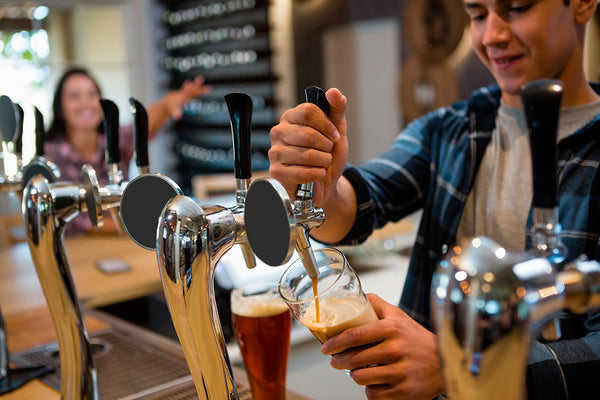
In a premix system, the drink enters the circuit already ready to consume. It can be in a keg, tank, KeyKeg, Cornelius, finished Bag‑in‑Box or another compatible container. The system must keep the drink in good condition, drive it with suitable gas, pump or pressure, chill it if necessary and serve it through a tap.
The big advantage is that the recipe already comes defined. The bar or restaurant does not have to mix ingredients during service. This makes consistency, speed and staff training easier, especially when working with branded products, external producers or previously validated recipes.
- Fixed and consistent recipe.
- More intuitive operation.
- Fewer mixing variables at the bar.
- Ideal for beer, wine, vermouth, and fermented beverages.
- Good format for producers and premium beverages.
- Allows you to work with kegs, barrels or tanks.
- Greater storage volume.
- Less flexibility to tweak the recipe on the fly.
- Higher logistics cost for beverages with a lot of water.
- Depends on good turnover.
- It needs proper cooling and cleaning.
- It can generate losses if the format does not match consumption.
How a postmix system works
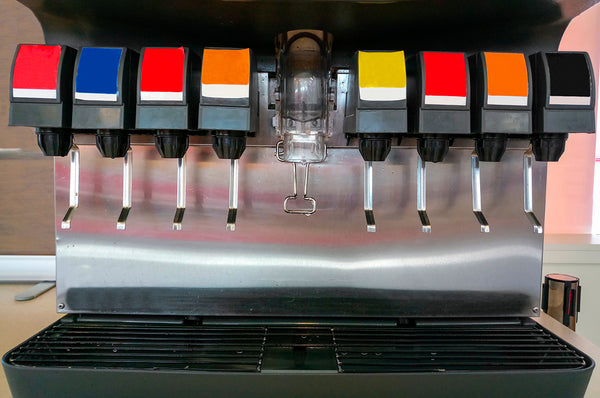
In a postmix system, the final drink is created at the moment of serving. The equipment takes filtered, cold, or carbonated water, mixes it with syrup, concentrate, or drink base, and dispenses it through a valve, gun, tap, or column. The concentrate is usually stored in Bag-in-Box and is driven by a pneumatic pump, electric pump, or specific system.
Postmix is very useful when there is high volume, repetitive recipes, a need to save space, cost control per glass and drinks where water represents a large part of the final product. That’s why it’s common in soft drinks, mixers, sodas, lemonades, iced teas, non-alcoholic bases and restaurant chains.
- Less storage space.
- Good control of cost per glass.
- High service speed.
- Ideal for repetitive drinks.
- Allows you to work with locally filtered water.
- It can be integrated with self-service or high-volume bars.
- Requires calibration and maintenance.
- It depends a lot on the quality of the water.
- Needs pumps, carbonator, and CO₂ if there is soda.
- Flavor can change if the ratio is not correct.
- Requires valve and line cleaning.
- Greater initial technical complexity.
Bag-in-Box: when it is premix and when it is postmix
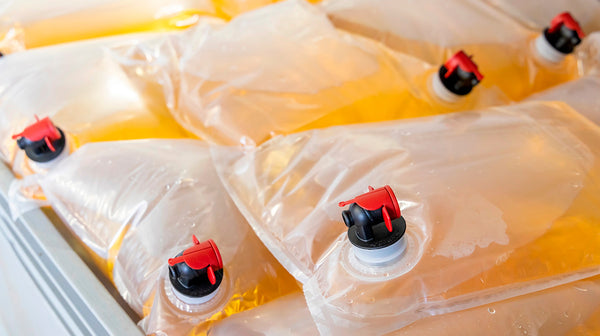
Bag-in-Box does not automatically mean postmix. It is a flexible container inside a box, but its contents can differ. It may contain a finished drink ready to serve, or it may contain a concentrate that must be mixed with water, soda or another component.
| Bag-in-Box with... | System type | Examples | What it technically involves |
|---|---|---|---|
| Finished drink | Premix | Wine, vermouth, prepared cocktail, ready‑to‑drink non‑alcoholic beverage. | It is driven and served; it is not mixed with water at the tap. |
| Syrup or concentrate | Postmix | Soft drinks, mixers, lemonades, iced teas, soda bases. | Requires mixing with water or soda and ratio calibration. |
| Cocktail base | Hybrid | Spritz, margarita, filtered mojito, mocktail, base sangria. | It may require dilution, carbonation, gas, cooling or recipe adjustment. |
The right question is not just “Is it Bag-in-Box?”
The right question is: does the Bag-in-Box contain finished drink or concentrate? If it contains finished drink, we’ll treat it as premix. If it contains syrup or concentrated base, we’ll need postmix logic: water, soda, pump, ratio, calibration and maintenance.
The role of water in postmix systems
In postmix, water can make up most of the final drink. That’s why it can’t be treated as a minor detail. Its taste, smell, hardness, chlorine, pressure, flow rate, and temperature directly affect the result. A good concentrate won’t produce a good drink if the incoming water isn’t properly treated.
For soft drinks, mixers, soda, lemonades, iced teas and carbonated beverages, it’s advisable to study filtration, activated carbon, sediments, reverse osmosis if appropriate, mains pressure, flow rate, tanks, pumps and maintenance. In professional projects, water treatment should be integrated from the initial design.
| Water variable | Why it matters | Risk if not controlled |
|---|---|---|
| Flavor and aroma | Water defines a large part of the final drink’s profile. | Dull drink, with a chlorine taste or poorly balanced. |
| Hardness | It affects the equipment, carbonation and maintenance. | Scale buildup, lower performance and more breakdowns. |
| Pressure | The carbonator and valves need stable pressure. | Irregular flow, poor carbonation or system stoppages. |
| Flow rate | The equipment must meet peak-time demand. | Lines, slow service, or inconsistent drinks. |
| Filtration | Protects flavor, equipment, and internal components. | Blockages, off-flavors and increased maintenance. |
Does your postmix need treated water?
In postmix systems, soda, sparkling water, and soft drinks use water as part of the recipe. We can assess filtration, flow, pressure, carbonation, and maintenance with AquaTaps solutions integrated into the project.
See dispensers and water treatment Read water dispenser guideCO₂, carbonation and soda in postmix
When a postmix drink is carbonated, the system needs to produce or supply sparkling water. To do this, food-grade CO₂, a pressure regulator, cold water, and a carbonator are used. The carbonator mixes water and CO₂ to generate soda or carbonated water, which is then combined with syrup or concentrate in the dispensing valve.
Carbonation depends on water temperature, CO₂ pressure, carbonator performance, service flow rate, and system design. If the water isn’t cold enough or the pressure isn’t stable, the drink may come out under-carbonated, too aggressive, or inconsistent.
- Treated water inlet.
- Filter or treatment system.
- Carbonator.
- CO₂ cylinder or supply.
- Regulator and pressure gauge.
- Soda line and syrup line.
- Postmix valve or gun.
- Flat drink due to empty or poorly adjusted CO₂.
- Low carbonation due to warm water.
- Irregular flow due to lack of pressure.
- Variable flavor due to poor calibration.
- Blockages due to lack of cleaning.
- Leaks in fittings or check valves.
Brix, ratio, and calibration: the critical point of postmix
In postmix, the final drink depends on the ratio between water and syrup being correct. This calibration is usually measured as a ratio or in Brix, and must be adjusted according to the concentrate manufacturer’s spec sheet. Many drinks work with ratios around 5:1, but this is not a universal rule: some products use higher ratios and others, such as juices or specific mixers, may require much lower proportions.
A poorly calibrated drink is noticeable right away: if there’s too much water, it ends up weak, flat or tasteless; if there’s too much syrup, it’s sweet, heavy and expensive. On top of that, the cost per glass stops being reliable.
| Situation | Result in the glass | Business impact | What to do |
|---|---|---|---|
| Too much water | Weak flavor, flat mouthfeel or poorly defined drink. | Dissatisfied customer and perception of low quality. | Check Brix, pressure, valve and syrup flow. |
| Too much syrup | Very sweet, dense, or cloying drink. | Higher cost per glass and less consistency. | Recalibrate the ratio and check the pump. |
| Bad-tasting water | The drink carries chlorine, off‑odors or hardness. | Quality issues even if the syrup is correct. | Install or check filtration/treatment. |
| Unstable CO₂ | Uneven bubbles, excess foam, or lack of gas. | Inconsistent service and complaints. | Check cylinder, regulator, carbonator and temperature. |
| Dirty valve | Mixed flavors, dripping, blockage, or irregular flow. | Poor hygiene and product loss. | Apply regular cleaning and maintenance. |
Uncalibrated postmix means a variable recipe
Postmix can be very profitable and fast, but only if the ratio stays stable. Calibration must be part of maintenance, just like cleaning lines, valves, pumps, and taps.
Which drinks are best suited to premix, postmix, or hybrid
The choice depends greatly on the drink. Some work better as a finished product; others make more sense as a concentrate; and others can be designed in a hybrid way depending on the venue’s goal.
| Beverage | Most common system | Reason | Technical inspection |
|---|---|---|---|
| Beer | Premix | Fermented, carbonated product finished by the producer. | Keg, coupler, CO₂, chilling, pressure, and cleaning. |
| Wine | Premix | Final beverage, sensitive to oxidation and temperature. | Inert gas, materials, cold, and rotation. |
| Vermouth | Premix | Finished drink with sugar, aroma and a defined profile. | Cleaning, oxidation, temperature and compatible lines. |
| Kombucha | Premix or keg | Fermented drink, acidic and sometimes carbonated. | Materials, pressure, acidity, sediment and cleaning. |
| Cider and mead | Premix | Final fermented drink, with variable carbonation. | Pressure, gas, temperature and stability. |
| Soft drinks | Postmix | The concentrate is mixed with water or soda at the point of sale. | Water, carbonator, CO₂, Brix and valves. |
| Mixers and flavored soda | Postmix | High rotation, space saving, and cost control. | Calibration, filtered water, and CO₂ pressure. |
| Lemonades and iced teas | Postmix or premix | It depends on whether you’re working with concentrate or a ready-made recipe. | Cooling, sugar, pulp, cleaning and viscosity. |
| Cocktails on tap | Premix or hybrid | It can be a complete recipe in a keg or a base that is completed at dispense. | Technical recipe, stability, alcohol, sugar, gas, and cleanliness. |
| Mocktails | Postmix, premix or hybrid | It depends on the concept: base, syrup, soda, or full recipe. | Calibration, water, gas, cleaning, and consistency. |
| Nitro coffee / cold brew | Premix | Prepared product that is served with nitrogen or without gas. | N₂, stout tap, cooling, cleaning and rotation. |
What to choose depending on your type of business
The choice between premix and postmix isn’t made based only on the product. It also depends on the business model. A fine-dining restaurant, a fast casual, a hotel, a beach club, and an event don’t share the same priorities.
| Type of business | Common pain point | Recommended system | Objective |
|---|---|---|---|
| Bar or brewery | Rotation, pour quality, foam and maintenance. | Premix in kegs for beer, kombucha, cider, or fermented beverages. | Fresh product, good service and less waste. |
| Fast casual / QSR | Queues, bottle restocking, cost per drink and speed. | Postmix with Bag-in-Box, filtered water and carbonator. | Speed, margin, and operational control. |
| Hotel / resort / beach club | Several bars, pool, lobby, events and high volume. | Combination: water, postmix, cocktails, beer, wine and vermouth. | Replicate the experience and control maintenance. |
| Cocktail bar or late-afternoon drinks | Service peaks and repetitive recipes. | Premix cocktails in kegs or hybrids with soda/base. | Speed without losing recipe consistency. |
| Food hall or chain | Standardization across points of sale. | Postmix and controlled bases with technical data sheets. | Scale recipe, cost and experience. |
| Events and festivals | High volume in a short time. | Premix for beer/cocktails and postmix for soft drinks/mixers. | Fast service, reliable setup and fewer issues. |
Not sure if your project needs premix, postmix or both?
Tell us which beverages you want to serve, expected volume, type of venue, number of bars, available water, cold-storage space, and main objective. We’ll study the most suitable technical configuration.
See tap beverage systems Request technical studyMaintenance, cleaning, and training
Premix and postmix both require maintenance, but not the same kind. In premix, the priority is to keep the drink in good condition, clean the line, tap, coupler and connectors, and adjust cooling and pressure. In postmix, you also need to check pumps, valves, ratio, carbonator, CO₂, water quality and calibration.
An uncleaned and uncalibrated postmix system can produce inconsistent drinks, mixed flavors, leaks, drips, sugar residues, blockages and hygiene issues. An uncleaned premix system can ruin a high-quality beer, wine, vermouth, kombucha or cocktail.
- Line and tap cleaning.
- Check the keg coupler or connector.
- Pressure and temperature control.
- Inspection of seals, fittings, and check valves.
- Control of rotation and product date.
- Training on changing a keg or barrel.
- Cleaning of valves, lines and nozzles.
- Brix or ratio calibration.
- Syrup pump check.
- CO₂ and carbonator control.
- Changing water filters.
- Training in purging, changing BIBs, and diagnostics.
Draft beverages don’t end with the installation
A well-designed system needs a routine for opening, closing, cleaning, changing containers, checking pressure, purging, calibrating where applicable, and training staff. Without maintenance, both premix and postmix lose quality.
How this article complements the multibeverage systems page
This article answers a specific question: what is the difference between premix and postmix, how each system works, and when to choose one or the other. Its purpose is educational, comparative and technical.
The page for draft beverage systems for hospitality should function as the main commercial page for projects: technical study, configuration, installation, maintenance, solutions by drink, sectors, and advice request.
| Contents | SEO objective | Commercial function | Main CTA |
|---|---|---|---|
| Premix vs postmix article | Address informational intent: differences, advantages, disadvantages and criteria. | Educate the customer before requesting a project. | Redirect to the multi-beverage page or technical contact. |
| Beverage systems by tap page | Capture commercial intent: installation of multi-beverage systems for hospitality. | Convert leads, explain solutions, and request a technical assessment. | Request consulting or a turnkey project. |
Which components you may need
The final system will depend on whether you work with premix, postmix, or a hybrid solution. These are the most common product and service families.
| Need | Component or service | Internal link |
|---|---|---|
| Serve chilled drinks from the tap | Dispenser, chiller, ice bank or undercounter system. | Dispensers and cooling equipment |
| Set up a visible service point | Taps, columns, towers, drip trays, and tap handles. | Beverage taps |
| Connect premix kegs or barrels | Couplers, Cornelius connectors, KeyKeg or adapters. | Keg couplers |
| Work with CO₂ or N₂ | Cylinders, regulators, pressure gauges, and gas safety. | Gas and regulators |
| Install food‑grade lines | Tubes, fittings, quick connectors, check valves and adapters. | Dispensing tubes |
| Connect technical components | Fittings, connectors, valves, reducers, and accessories. | Connectors and fittings |
| Ensure hygiene | Cleaning can, adapters, detergent and cleaning routine. | Cleaning and maintenance |
| Design a complete solution | Technical study, installation, commissioning, and training. | Tap beverage systems |
Checklist before choosing premix or postmix
- Define which drinks you want to serve on tap.
- Indicate whether the drink should arrive ready to serve or can be mixed at the point of service.
- Calculate daily volume and service peaks.
- Check available space for kegs, Bag-in-Box, CO₂, filters and equipment.
- Check water quality, pressure, and flow.
- Define whether you need still, chilled, or sparkling water.
- Check whether you need to work with CO₂, N₂, compressed air, or a pump.
- Calculate the number of taps, valves or dispensing guns.
- Define a cleaning, calibration and maintenance routine.
- Prepare training on changing containers, purging, and incident detection.
Design your beverages on tap system with technical criteria
At Install Beer we can assess whether your project is a better fit for premix, postmix, Bag-in-Box, kegs, cocktails on tap, filtered water, soda, nitro coffee, wine, vermouth, kombucha, or a complete multi-beverage solution.
Request a multi‑beverage study Contact Install BeerFrequently asked questions about premix and postmix drinks
What is the difference between premix and postmix?
In premix, the drink arrives already mixed and ready to serve. In postmix, the final drink is mixed at the dispensing point, usually combining cold or carbonated water with syrup, concentrate, or a beverage base.
Is the beer premix or postmix?
Beer is normally considered premix, because it reaches the keg as a fermented, finished drink. The dispensing system only has to preserve it, drive it, chill it and serve it correctly.
Are fountain sodas postmix?
In most cases yes. The system mixes cold or carbonated water with syrup or concentrate at the moment of serving, which is why it requires calibration, CO₂, treated water and maintenance.
Does Bag-in-Box always mean postmix?
No. A Bag-in-Box can contain a finished drink, which would work as premix, or a syrup/concentrate that must be mixed with water or soda, which would be postmix.
What is Brix in postmix?
This is the measurement or adjustment of the ratio between syrup and water or soda. If the Brix is not properly calibrated, the drink can end up watery, too sweet, flat, or inconsistent.
Which system takes up the least space?
Postmix usually takes up less storage space because it works with concentrates. Premix transports and stores the final beverage, so it can take up more volume.
Which system needs more maintenance?
Postmix usually requires more technical maintenance because it needs calibration, pumps, a carbonator, filtered water and valve cleaning. Premix also requires cleaning, pressure, cooling and line maintenance.
Can I combine premix and postmix on the same bar?
Yes. Many multi-beverage projects combine beer, wine, vermouth, or premix cocktails with postmix soft drinks, mixers, soda, or lemonades. The key is to design cooling, gas, water, lines, taps, and cleaning properly.
Which businesses benefit most from postmix?
Fast casual, QSR, food halls, hotels, events, chains, high‑volume restaurants, and businesses that serve many repetitive drinks can benefit from the space savings, speed, and cost control of postmix.
Can Install Beer design a premix or postmix system?
Yes. Install Beer can assess the type of drink, venue, volume, water, gas, cooling, lines, taps, cleaning and maintenance to design a premix, postmix, hybrid or multi-beverage solution.
Technical note: the choice between premix and postmix should be made according to drink, recipe, water, pressure, temperature, flow rate, container, space, cleaning, rotation, maintenance, and commercial objective. Before installing a professional system, it’s advisable to carry out a technical study of the venue and the planned service.