
How to properly age a beer
When it comes to aging our beers, not all of them are suited to this long-distance race. It’s important that our elixir meets certain criteria so it doesn’t fall short. The most obvious is alcohol by volume. Beers from 8% ABV upwards are good candidates to rest in our pantry, since alcohol acts as a natural preservative and beer is, after all, a soup of sugars.
Another factor is appearance. Darker styles improve significantly during aging compared to paler ones. The same is true for beers that include smoked malts, as smoke also imparts its preservative qualities. Special mention should be made of beers that have been matured in barrels, as the wood will have contributed tannins and, in some cases, a microflora (such as Brettanomyces) that will drive the evolution of our precious liquid. In fact, sour beers are strong candidates for aging.

So which specific styles are worth aging?
- Doppelbock
- Weizenbock
- Eisbock
- Rauchbier
- Baltic porter
- Scotch ale (wee heavy)
- Imperial stout
- Barleywine
- Flanders red ale
- Lambic
- Oud bruin
- Gueuze
- Dubbel
- Dark strong ale
- Christmas ale (winter ale)
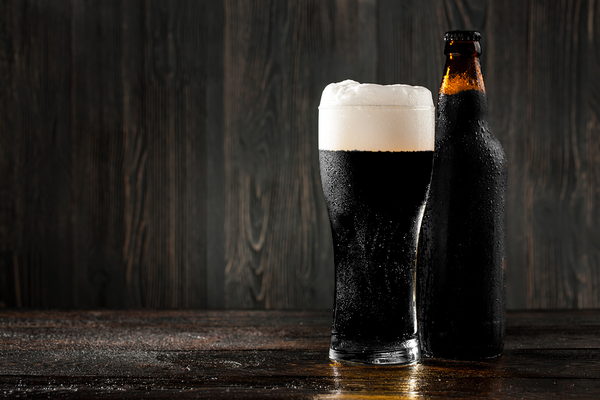
Broadly speaking, none of these styles will disappoint you. Now then, can or bottle? Generally speaking, it’s almost always better to age bottles even though glass does let some light through. The reason is the spontaneous refermentation that can occur in a product containing live yeast and fermentable sugars. Let’s avoid unpleasant surprises.
Likewise, to age beer properly, we need a constant temperature, what in wine service is called “cellar temperature.” This broad range goes from 5°C to 18°C, so the recommendation is a cool place with a stable temperature throughout the year. It also needs to be a space protected from light so as not to spoil the beer. For example, a pantry or a basement.

Now, aging beer doesn’t mean we forget about it. The ideal cellaring time ranges from one to three years. Almost all the styles we’ve mentioned reach their peak at around three years; after that, their compounds start to break down and nuances are lost. Let’s not forget that the reason we age certain beers is to round out their organoleptic profile and gain complexity, with aromas that can be reminiscent of sherry. In other words, to obtain a different beer.
For impatient palates, more and more brands are releasing barrel-aged beers. These coveted bottles carry an additional storage cost that in most cases multiplies the product’s original price several times over. In any case, as consumers we can buy two bottles of the same beer to enjoy one fresh and another after some time. What’s more, we can buy a bottle of the same beer every year to taste them in a vertical tasting.
