
Where does cider come from?
Although the origin of cider is uncertain, some historians suggest it originated in the civilizations of Ancient Egypt and Classical Greece. In the Iberian Peninsula, references by Pliny the Elder to apples suggest that cider already existed in Asturias before the Roman invasion. Today, this fermented drink has a strong tradition in various European regions such as Spain, Portugal, France, Italy, Germany and the United Kingdom. Let’s explore its history.
Cider in Europe
Beyond our borders, the earliest references we have to cider date back to the early 9th century in the Capitulare de Villis, a legislative act that regulated trade, rules and penalties in the Carolingian Empire. In contrast, if we look at the Iberian Peninsula, we find the will of Ego Fakilo from the year 793, preserved in the Cathedral of San Salvador in Oviedo, which specifies that estates, forests, vineyards and apple trees are bequeathed for making must and cider.
In France, cider is produced mainly in Normandy, where it has been made for centuries. In the United Kingdom, regions such as Somerset, Herefordshire and Devon produce this drink under the name cider. In Germany, cider is called apfelwein and is drunk mainly in the Frankfurt am Main region.

Cider in Spain
Cider is a very popular drink along the Cantabrian coast, especially in Asturias and the Basque Country, where it is considered an intrinsic part of their culture and folklore. From the 17th century onward, this drink began to gain importance in the municipalities of Villaviciosa, Colunga and Nava, and during the 19th century it became a popular drink throughout Asturias. Today, Asturias is the main cider producer, with more than 80% of national production. For its production, only local apple varieties are used, such as Raxao and Xuanina, among others.
How is cider made?
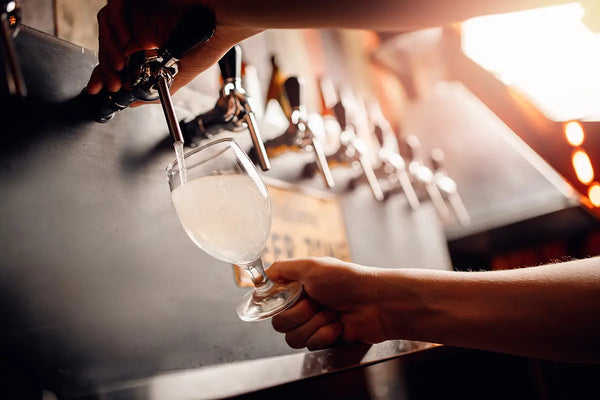
First, the apples are harvested and washed with water to remove dirt. Next, the apples are crushed and pressed to extract the must. The must is left to ferment for several months at a low temperature to prevent the drink from losing its carbonation. It is then bottled or stored in barrels. When it comes to tasting, in Spain cider is served “escanciada”, meaning it is poured from a height of about one meter so that the drink is oxygenated and releases carbon dioxide.
