
How are new hop varieties created?
Since the Neolithic period, humans have been meticulously selecting the best fruits—the fleshiest, the sweetest—in order to later plant their seeds. Since the dawn of agriculture, we have always sought to modify the characteristics of plants in ways that benefit us. This millennia-long domestication began to be better understood after Mendel published his experiments with peas in the 19th century. It is from these genetic discoveries that experimentation with a more rigorous approach began, and this has of course had a major impact on the hops used for brewing beer.

Although hops grow wild along riverbanks, they have been cultivated for centuries as a preservative for “barley juice.” Artificial selection has been aimed at producing cones with higher concentrations of acids—responsible for bitterness—and essential oils—which provide aroma, as well as, of course, ensuring that each plant yields more cones. But it doesn’t end there. It’s not just about quantity. The qualitative variable is also subject to genetic engineering.
The companies behind the hop business seek to create new varieties that offer novel aromas and flavors they can patent. Indeed, there are more than 250 different essential oils. These increasingly exotic new hops are irresistible to craft brewers. In fact, depending on the nuances of each hop, the different varieties are grouped into four families:
- Old World hops: herbal notes.
- Noble hops: floral and spicy notes.
- American hops: citrusy and resinous notes.
- New World hops: fruity and tropical notes.
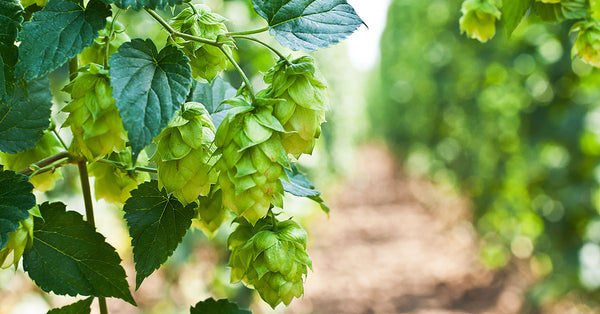
However, we must not forget another of the major goals of genetic engineering and crossbreeding: for the plant to tolerate harsher conditions. We’re talking about the fact that hops prefer cool, humid climates, but certain regions do not offer these characteristics. Therefore, there is constant experimentation with which hop varieties adapt best to hot environments with low rainfall. For example, in Spain the Nugget variety is mainly grown, as it withstands the peninsular climate better, although experiments are underway with Eureka, Apollo and Bravo to start planting them in the future.
Hops are green gold, and large companies are looking for new varieties through crossbreeding to get even more out of them. In the end, we all want beers that are more aromatic, more flavorful, and more surprising.
