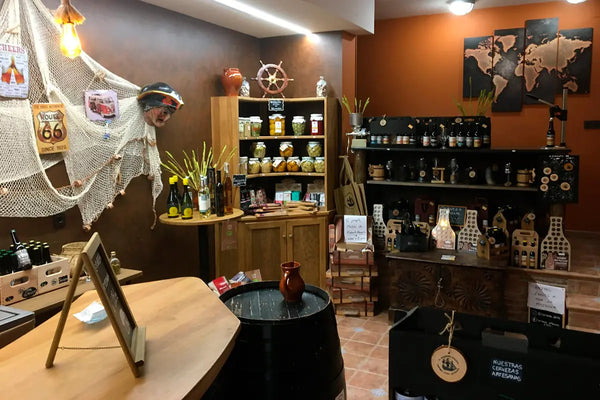
How local can a brewery be?
Since its origin, craft beer has been sold under the slogan of “local product.” This term usually refers to the place of production and is based on the idea of promoting the economy and employment in our surroundings.
However, when we look into the raw material suppliers used by Spanish microbreweries, we see that both hops and malt come from other countries such as Germany, the Czech Republic and the United Kingdom, among others. This is because large industrial breweries need to hoard most of the barley malt and hops produced in Spain.
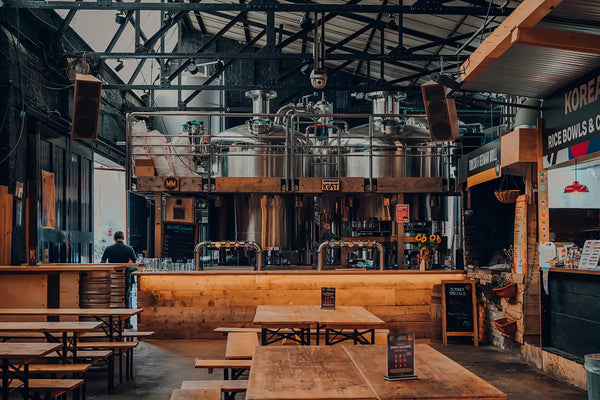
So is it impossible to find a brewery with that local component in terms of raw material origin and use of local suppliers? Not at all. Like the Gaulish village of Asterix and Obelix, some projects have wanted to take the concept of “local” even further. One example is the craft beer d'Olite. The brewery is located in the town of Olite, in the heart of central Navarre, known for its viticulture. It emerged in 2019, when Montse and Pieter decided to fulfill their dream of brewing craft beer, not just as a hobby but as a profession.
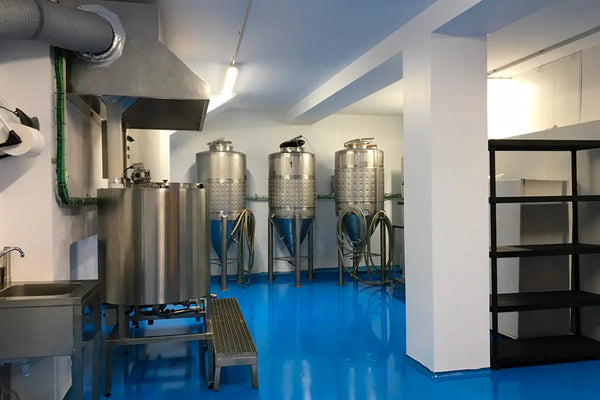
The brewhouse produces batches of up to 500 liters and has a direct-to-public shop, where you can learn about the brewing process for up to 9 different styles made from Navarrese malt and hops from Olite. d'Olite craft beer has received good reviews from visitors, who consider it an interesting option in a region known mainly for its vineyards and wineries.
This is possible thanks to farmers from the municipality such as Pedro Rodeles, who decided to venture into hop cultivation and now has 6 hectares under this crop. Rodeles sells 80% of his production to craft breweries, which demonstrates the demand and viability of these initiatives. In turn, the Queen Country Hop Farm cooperative has also contributed to energizing hop cultivation.
Likewise, Intermalta is another major player in the country, a company dedicated to malt production since its founding in 1977. One of its three plants in Spain is located in the Navarrese town of San Adrián. The other two are in Albacete and Seville, with a total output exceeding 150,000 tons of barley malt per year. The company has also developed a business line called Intermalta Craft, which offers craft brewers the opportunity to purchase malt directly without having to go through intermediaries.
As we can see, for a microbrewery to proudly bear the label of local, it largely depends on the existence of nearby suppliers who can provide the necessary raw materials. D’Olite in Navarre is an isolated case, but at the same time a future aspiration for many other producers.