

Differences between NEIPA, Hazy IPA, Milkshake IPA, Juicy IPA and other IPA styles
IPAs have gone from being a family of bitter, hoppy beers to becoming one of the most creative territories in craft beer. Today we find West Coast IPA, American IPA, NEIPA, Hazy IPA, Juicy IPA, Milkshake IPA, Cold IPA, NZIPA, Brut IPA, Session IPA, Double IPA, Triple IPA, Black IPA, White IPA, Belgian IPA, Sour IPA, Rye IPA and many more variations. Understanding their differences helps you choose better, serve better and store each beer better.

Quick overview
NEIPA and Hazy IPA usually refer to hazy, juicy, aromatic IPAs with lower perceived bitterness and lots of dry hopping. Juicy IPA highlights the fruity character. Milkshake IPA adds lactose and often fruit or vanilla to provide sweetness and body. West Coast IPA is drier, clearer, and more bitter. Cold IPA aims for cleanliness, a crisp finish, and intense hops. NZIPA focuses on New Zealand hops.
What you need to know before differentiating IPA styles
Many IPA labels are not closed categories, but ways of communicating a sensory intention: hazier, juicier, more bitter, drier, more tropical, more resinous or creamier. Some names are included in style guidelines; others are commercial terms, market trends or emerging substyles.
It’s also important to remember: IPAs, especially heavily hopped ones with dry hopping, are very sensitive to freshness, oxygen, temperature, line cleanliness, and rotation. Poor tap service can mute the aroma, accentuate flaws, or create an experience far below what the producer intended.
Guide contents
What modern IPAs have in common
The original article explained that NEIPA, Hazy IPA, Milkshake IPA, and Juicy IPA share a common base: they are top-fermented beers, hop-forward, with late additions or dry hopping and a very aromatic profile. That idea is still valid, but today it’s worth expanding it to a much more diverse IPA family.
Modern IPA is not defined solely by being bitter. Many current IPAs aim for tropical aroma, smooth texture, low harshness, a dry finish, clean profile, notes of stone fruit, citrus, resin, pine, white grape, lime, mango, passion fruit, melon, or even herbal and diesel notes in some New Zealand hops.
Hops define aroma, flavor, bitterness, freshness, and the style’s personality.
Highly hopped IPAs quickly lose quality if exposed to oxygen, heat or poor storage.
Temperature, pressure, cleaning, and rotation have a big impact on how the IPA reaches the glass.
Quick IPA style table
| Style | Appearance | Dominant profile | Perceived bitterness | Key service point |
|---|---|---|---|---|
| English IPA | Golden to amber | Malt, herbal/floral hops, classic balance. | Medium | Not excessively cold temperature and a clean glass. |
| American IPA | Pale to copper | Citrus, pine, resin, fruit, American hops. | Medium-high | Freshness, stable cooling and correct pressure. |
| West Coast IPA | Clear, golden | Dry, bitter, resinous, citrusy, clean. | High | Avoid oxidation and serve with controlled flow. |
| NEIPA / Hazy IPA | Hazy, golden-orange | Tropical fruit, smooth texture, intense dry hopping. | Medium or medium-low | Maximum freshness, clean line, and low exposure to oxygen. |
| Juicy IPA | Variable, often cloudy | Fruity, juicy, aromatic sensation. | Variable | Preserve aroma and prevent oxidation. |
| Milkshake IPA | Hazy, creamy | Sweetness, lactose, fruit, vanilla, body. | Medium-low | Pay special attention to cleaning due to sugars, fruit, and higher body. |
| Cold IPA | Clear to slightly pale | Clean, dry, crisp, very hoppy. | Medium-high | Serve fresh, clean, and without oxidation. |
| NZIPA | Pale to golden | New Zealand hops: tropical, citrus, herbal, grape, diesel. | Medium-high to high | Preserve hop freshness and aroma. |
| Session IPA | Variable | Lighter, more drinkable, and aromatic IPA. | Medium | Prevent it from seeming watery or flat. |
| Double / Triple IPA | Variable | More alcohol, more body, more hops, and more intensity. | High, although it may be balanced | Proper temperature and glassware so as not to mute aromas. |
NEIPA, Hazy IPA and Juicy IPA: similar, but not identical
The original article explained that a Hazy IPA is, literally, a hazy IPA. It also said that a NEIPA is still a Hazy IPA with an origin and identity linked to New England. Today it’s worth qualifying that: on many menus and labels, NEIPA and Hazy IPA are used almost as synonyms, but they don’t always mean exactly the same thing.
Hazy IPA mainly describes the hazy appearance and modern profile: smooth body, stable haze, very aromatic hops, juicy sensation and perceived bitterness lower than a West Coast IPA. NEIPA refers more to the New England school: expressive yeasts, low flocculation, heavy dry hopping, silky texture and hops with tropical or fruity character. Juicy IPA is a more sensory and commercial term: it indicates an IPA with a juice-like sensation, ripe fruit and intense aroma, whether or not it is extremely hazy.
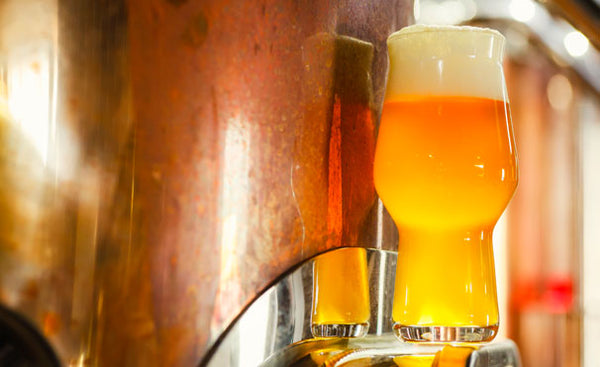
New England approach: hazy, smooth, very aromatic, with yeast and dry hopping as an essential part of the profile.
Broader term for hazy IPA. It can share a NEIPA profile, but it doesn’t always have the same yeast or body focus.
It highlights a fruity, juicy sensation. It can be hazy, but the term points more to flavour/aroma than to technical turbidity.
Hazy doesn’t mean dirty
A Hazy IPA can be cloudy, even opaque, but it should not contain visible clumps, large hop particles or floating yeast. The haze should be part of the style, not the result of poor brewing, poor storage or a dirty line.
Milkshake IPA: lactose, fruit and creamy texture
The original article explained very clearly that Milkshake IPA is a “false friend”: it doesn’t contain milkshake, but usually includes lactose. Lactose is a non-fermentable sugar from milk that can add sweetness, body, and a creamy sensation. Many Milkshake IPAs also include fruit, purée, vanilla, or other ingredients to reinforce the idea of a dessert, smoothie, or creamy juice.
It’s an appealing style for new consumers because it softens bitterness and enhances the fruity profile. But it also demands technical care: sugars, fruit and a denser body may require greater attention to cleaning, turnover, line, tap and product stability.
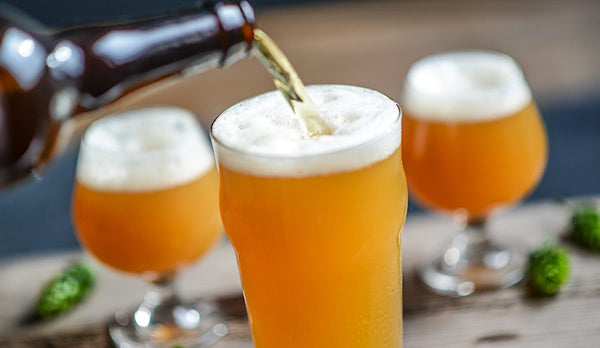
Attention to allergens and cleaning
If a Milkshake IPA contains lactose, this must be communicated properly because it comes from milk. In addition, beers with fruit, sugars, or adjuncts may require more care when cleaning lines, taps, and connectors.
West Coast IPA and American IPA: clarity, bitterness, and a dry finish
Before the hazy explosion, the modern image of IPA was closely associated with American IPA and, especially, West Coast IPA. These are clearer, drier, cleaner beers, with more pronounced bitterness and aromas of citrus, pine, resin, grapefruit, tropical fruit or herbal notes depending on the hops.
West Coast IPA usually aims for a crisper, drier feel than a Hazy IPA. The hop character is expressed less as creamy juice and more as defined bitterness, a clean finish and intense aroma. If a Hazy IPA wants to feel soft and juicy, a West Coast IPA wants to feel precise, bright and direct.
| Comparison | West Coast IPA | Hazy / NEIPA |
|---|---|---|
| Appearance | Clear or with slight haze. | Hazy or opaque. |
| Bitterness | Firmer, drier and more pronounced. | Lower or smoothed out by body and texture. |
| Aroma | Citrusy, resinous, pine, grapefruit, fruit. | Tropical, stone fruit, juice, mango, citrus. |
| Body | Medium-light to medium body, dry finish. | Medium to full, smooth texture. |
| Service | It needs freshness and good pressure so it doesn’t come across as harsh. | It needs maximum protection against oxidation and a clean line. |
Cold IPA: clean, dry, hoppy, and crisp
Cold IPA is one of the most interesting modern terms. It should not be confused with an India Pale Lager or a classic hoppy lager. It typically aims for a very clean, dry, bright IPA, fermented at lower temperatures, with a very neutral yeast profile and total prominence of the hops.
The idea is to get closer to a “colder” IPA in sensation: crisp finish, defined bitterness, high drinkability, and intense aroma. As an emerging style, it can still vary quite a bit between breweries, but its intention is usually clear: a modern IPA, clean, dry, and very focused on hops.
- Clean, dry profile.
- Defined bitterness.
- Intense hop character.
- More neutral fermentation.
- Greater sensation of freshness.
- Not a sweet lager.
- Not a hazy, creamy Hazy IPA.
- Not an identity-less IPL.
- Not an oxidised or dull beer.
- Not a warm IPA.
NZIPA or New Zealand IPA: New Zealand hops
NZIPA means New Zealand IPA. Its identity revolves around New Zealand hops such as Nelson Sauvin, Motueka, Riwaka, Rakau, Wai-iti, Pacifica, Kohatu or similar varieties, depending on the producer. These hops can offer notes of white grape, lime, tropical fruit, passion fruit, stone fruit, fresh grass, citrus or more intense and distinctive profiles.
An NZIPA is not defined only by the brewery’s country of origin, but by the character of the hops used and how they are integrated. It can be clear or slightly hazy, drier or juicier, but it should stand out for a very expressive and recognizable aromatic profile.
Key idea
If a West Coast IPA usually evokes citrus, pine, and resin, an NZIPA can take the IPA profile toward white grape, lime, tropical fruit, stone fruit, fresh grass, or wilder notes depending on the hop.
Other well-known IPA styles
Beyond NEIPA, Hazy, Juicy, Milkshake, Cold and NZIPA, there are many other variants. Some are established styles; others are hybrids, marketing labels, or creative interpretations.
| IPA style | What characterizes it | Who it can be interesting for | Service risk |
|---|---|---|---|
| Session IPA | Less alcohol, lighter body and aromatic hops. | Anyone looking for a drinkable, less intense IPA. | It can seem watery if it loses carbonation or freshness. |
| Double IPA / DIPA | More alcohol, more body, and more hop load. | Fans of intense, powerful IPAs. | If it’s served too cold, it loses aroma; if it’s warm, the alcohol becomes too noticeable. |
| Triple IPA / TIPA | Extreme version, very intense, alcoholic, and hop-forward. | Slow consumption, tasting, and a very specialized audience. | It needs the right glass and temperature to avoid over-saturation. |
| Brut IPA | Very dry, effervescent, with a clean finish. | Those who are looking for a lighter, drier, more elegant IPA. | It may seem too dry or thin if it’s poured poorly. |
| Black IPA | Dark IPA with roasted notes, cocoa, coffee or dark malt and hops. | For those who want a mix of hop bitterness and roasted character. | Roast and hops can clash if it is oxidized. |
| Red IPA | Reddish IPA with more maltiness, caramel, or body. | For those who want more malt character without giving up hops. | It can lose balance if served too warm. |
| White IPA | Hybrid between IPA and Witbier, with wheat, citrus and spices. | Those looking for freshness, spice and moderate hops. | Requires good cleaning and a suitable glass. |
| Belgian IPA | IPA with Belgian yeast, esters, spices, and hops. | For those who enjoy spicy and fermentation‑driven profiles. | If it’s served too cold, the yeast is deactivated. |
| Sour IPA | It combines acidity and hops, sometimes with fruit. | Those looking for fresh, tart, modern IPA. | Pay attention to materials, cleaning, and line compatibility. |
| Rye IPA | Includes rye, contributing spiciness, dryness and texture. | Those looking for a more rustic or spicy IPA. | Body and texture can affect perceived flow rate. |
| Fresh Hop IPA | Brewed with fresh, newly harvested hops. | Fans of green, fresh, seasonal aroma. | Highly sensitive to time and storage. |
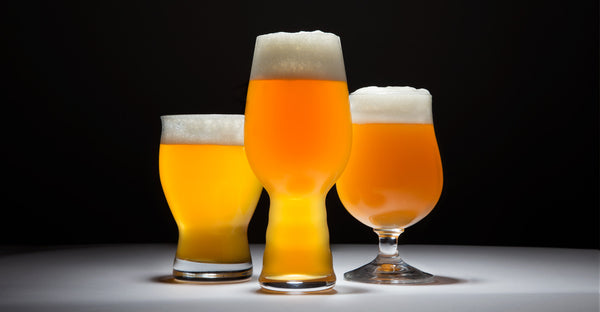
Do you serve craft IPA on tap?
Modern IPAs are sensitive to oxygen, temperature, pressure, cleanliness, rotation, and tap type. At Install Beer we can help you set up or review dispensing systems for hoppy beers.
View beer dispensers Check installationHow to serve IPA on tap without losing aroma or quality
IPA is one of the styles where poor storage or a bad installation is most noticeable. Aromatic hops degrade with oxygen, heat, time and light. On tap, quality can also be lost if the line is dirty, the pressure is incorrect or the keg doesn’t rotate enough.
An oxidized NEIPA can become dull, brownish or with slightly cloying sweet notes. A West Coast IPA with poorly adjusted pressure can seem harsh. A Milkshake IPA in a dirty line can develop off‑flavors, blockages or a poor experience. That’s why IPAs need especially careful installation and maintenance.
| Service variable | Why it matters in IPA | Practical recommendation |
|---|---|---|
| Freshness | Hop aroma degrades quickly. | Buy recent kegs and prioritize turnover. |
| Oxygen | It mutes aromas and can darken or alter the profile. | Avoid air intake, leaks and unnecessary handling. |
| Temperature | Too cold mutes aroma; too warm accentuates flaws. | Adjust according to style, producer and serving system. |
| Pressure | It affects foam, flow rate and carbonation. | Adjust CO₂ according to temperature, distance, keg and line. |
| Cleaning | IPAs quickly show off-flavors from a dirty line. | Clean lines, couplers and taps frequently. |
| Tap | It controls flow rate, foam and presentation. | Use a suitable tap, preferably with compensator in variable installations. |
IPAs don’t forgive a dirty line
In highly hopped styles, any trace of old beer, biofilm, dirt, oxidation or poor cleaning can alter the aroma and finish. Line cleaning is not an extra: it is part of service quality.
What to buy or check to pour IPA correctly
If you have a bar, taproom, brewery, event or home setup where you’re going to serve IPA, it’s worth checking the entire system: cooling, keg, coupler, gas, line, tap, cleaning and rotation.
| Need | Recommended product or service | Internal link |
|---|---|---|
| Serving cold IPA on tap | Dispenser, cooler, kegerator or complete system. | Beer dispensers |
| Control flow and foam | Tap with flow control and a suitable tower. | Beer taps |
| Connect IPA keg | Coupler compatible with the keg valve. | Keg couplers |
| Adjust serving pressure | CO₂, blend, regulator and pressure gauge. | Gas and regulators |
| Prevent oxidation and leaks | Proper fittings, tubing, connectors, and check valves. | Connectors and fittings |
| Keep the aroma clean | Cleaning of line, tap, keg coupler and connectors. | Cleaning and maintenance |
| Set up a professional installation | System design with cooling, gas, lines, taps and maintenance. | Dispenser installation |
Checklist for serving IPA better
- Buy recent kegs with good turnover.
- Keep the cold chain whenever possible.
- Avoid oxygen entering the system.
- Adjust pressure according to temperature, line and style.
- Use food-grade tubing and compatible fittings.
- Clean line, coupler and tap frequently.
- Not having more IPA lines than the venue can rotate.
- Communicate the style clearly: West Coast, Hazy, NEIPA, Cold IPA, NZIPA, etc.
- Use the right glass and serve with a good head of foam.
- Train the team to distinguish styles, flaws, and freshness.
Improve your IPA line per tap
At Install Beer we can help you choose tap, coupler, regulator, tubing, cleaning, cooler, or a complete installation to serve craft IPA with better aroma, less waste, and higher quality in the glass.
Consult Install Beer View cleaning and maintenanceFrequently asked questions about IPA styles
Are NEIPA and Hazy IPA the same thing?
They’re often used as synonyms, but not always. Hazy IPA describes a hazy, modern IPA; NEIPA refers more to the New England school, with expressive yeasts, smooth texture, heavy dry hopping, and a juicy profile.
What’s the difference between a Hazy IPA and a Juicy IPA?
Hazy IPA focuses on haze and texture; Juicy IPA focuses on the fruity, juicy sensation. Many Juicy IPAs are also Hazy IPAs, but the term juicy speaks more about the sensory profile than the appearance.
What is a Milkshake IPA?
This is a modern IPA that usually includes lactose to add sweetness and a creamy body. Many versions also add fruit, purée or vanilla. The use of lactose as a milk-derived ingredient must be clearly communicated.
What is a Cold IPA?
This is a modern IPA that aims for a clean, dry, crisp and very hoppy profile, usually with a more neutral fermentation and a fresh feel. It is an emerging style and can vary depending on the brewery.
What does NZIPA mean?
NZIPA means New Zealand IPA. It’s characterised by the use of New Zealand hops, with profiles that can evoke tropical fruit, lime, white grape, stone fruit, fresh grass or more intense notes depending on the variety.
What is the most bitter IPA?
Typically West Coast IPA, Double IPA or Triple IPA can have high bitterness levels, although perception depends on body, alcohol, residual sweetness, temperature and recipe balance.
Which IPA is easier to drink?
Session IPA, a soft Hazy IPA, a Juicy IPA, or some NEIPAs can be more accessible for new consumers thanks to their fruity aroma, lower perceived bitterness, and rounder texture.
Why should IPAs be consumed fresh?
Because hop aroma degrades over time, with oxygen, heat, and poor storage. Heavily hopped IPAs are especially sensitive to loss of freshness.
Can an IPA be served on tap?
Yes, but it requires care: fresh keg, stable cold, adjusted pressure, clean line, suitable tap, good turnover, and minimal exposure to oxygen.
Can Install Beer help me serve IPA at my venue?
Yes. Install Beer can help you with dispensers, taps, couplers, gas, tubing, cleaning, maintenance, and installation of systems for serving craft beer on tap.
Technical note: IPA styles are constantly evolving and many labels can vary depending on brewery, market and style guide. For professional service, the key is to keep the beer fresh, cold, protected from oxygen and dispensed through clean, well‑adjusted lines.